
V-Key

V-Key

V-Key

Is software-based Biometrics Authentication the solution to ASEAN’s regulatory challenges?

By Joseph Gan, CTO at V-Key

Banks in Southeast Asia should look towards software-based biometrics as the way forward to navigate the regulatory differences in the region and secure their customers’ transactions.

The ASEAN region is made up of 10 countries, with clear differences in their geography, language, culture and economic success. It is also an area with differing banking regulations.

The Monetary Authority of Singapore (MAS) adopts a regulatory approach that supports technology in banking, even creating a \”sandbox\”environment to test and trial innovations. Singapore’s neighbours in the region, although making steady strides in fintech innovation, still have some way to go, which means the regulatory frameworks are a few steps behind as well. For example, Malaysia’s central bank has recently called for a similar regulatory sandbox framework while Thailand has called for more regulation in fintech to minimise risk and protect consumers’ identities.

This heterogeneity in ASEAN’s regulatory landscape can make it very difficult for banks to do business in the region.

The creation of the ASEAN Banking Integration Framework in 2014 was a step in the right direction. The framework allows certain qualified banks that have adequate capital, resilience, good management and which adhere to prudential banking requirements to have wider access and more freedom to expand across countries in the ASEAN region. While this is a positive sign for banks, the integration will only take place in 2020, moving at a slower pace than other areas of integration in the region, such as trade integration in the form of reduction of tariff rates.

Which means the existing complexity and differences in regulations will still be a challenge for banks. Neal Cross, Chief Innovation Officer, DBS Bank, said at the Singapore Fintech Festival: “The biggest problem in ASEAN is the difference in regulations. To successfully establish our presence in another country, we always have to comply with two regulators – MAS and the regulator of the other country involved – and that’s tough. If ASEAN really wants to be the global fintech hub and a serious force in finance, this needs to be fixed.”


Providing convenient and secure software-based biometrics

One way that fintech can contribute to helping address this issue of differing  regulations is through the use of biometrics. Biometrics as a means of authentication provides a robust layer of security as it’s based on a unique identity in users’ physiology and behaviour – for example, fingerprints, iris scans, or facial recognition – something inherent to them, instead of something they know or own such as a password or a hardware token. This would ensure that users don’t depend on memorising passwords or carrying hardware tokens, the usage of which may be regulated differently across geographical borders.

However, fingerprints or iris scans are only supported on limited mobile devices due to the specialised hardware required to securely store and match the biometrics. To address this, banks can also use additional software-based biometrics such as facial recognition or eyeprints in order to achieve broader compatibility. Companies such as V-Key have been rolling out secure fintech solutions for banks and can help with regulatory acceptance by securing such software-based biometrics on end-user mobile devices using a virtual secure element.

In addition to the added security, biometrics allows banks to do away with the costs of deployment and scaling, making it easier to expand operations into newer, untapped markets cost-effectively. And with many banking customers already conducting transactions via their laptop and mobile devices, a transition to biometrics would be easy, as such gadgets already have built-in cameras for software-based biometrics.

From the end users’ perspective, biometrics also negates the inconvenience of handling multiple hardware tokens, allowing more people to access financial services, including the unbanked population. It provides a more reliable, convenient and secure form of authentication compared to personal identification numbers (PINs) or passwords, whether used digitally or at a physical bank branch. The fact that biometrics cannot be easily forged also protects customer information from being compromised by fraud.

This idea was echoed by Janet Young, MD & Head, Group Channels & Digitalisation, UOB, at the Fintech Festival when she explained, ”Biometrics is the way forward as, once captured securely, it will make it easier to do business with virtually anyone in the region, as well as bring financial inclusion to the population – and that’s what the regulators should work towards.”

”How many dongles and tokens do we have to carry now? And we don’t just bank with one bank, we bank with two or three,” she said. ”If we look at the fact that, ultimately, biometrics will be used, then the cost of doing business would really go down. This should be the way forward, and how we should be persuading our regulators that it’s a worthy investment.”

V-Key has already taken steps in this direction and offers customers the latest software-based biometric verification methods including fingerprint, voice and facial recognition, achieving a balance between safety of customer data and convenient user experience. In addition, this solution is integrated to V-Key’s own security platform to allow for threat analysis and compliance reporting.


Using biometrics-enabled identity cards

Some banks are already practising this in the region. Singapore’s largest bank, DBS Bank, launched digibank in India in April 2016, after working closely with the Reserve Bank of India (RBI). To open an account, a customer just needs to go to any of one of more than 500 cafes across India that are listed as partners of the bank. They present their Aadhaar, the national biometrics-enabled ID card, followed by verification through a fingerprint reader at the cafe. To develop and launch digibank, DBS worked with seven fintech partners providing various solutions, including V-Key’s own soft token solution.

In the first four months of operation in India, digibank attracted more than 250,000 new clients. The bank aims to replicate this success in other countries such as Indonesia, where DBS launched their digital bank at the end of 2016. Just like in India, customers will use their biometric national ID card to open an account. This service offering is in addition to the bank’s physical presence in the country – it has branches in 13 cities in Indonesia.


Crossing over borders easily

Using software-based biometrics is the best way forward for ASEAN banks to navigate the complexity in the region’s regulatory landscape and to open up to markets across the borders. It is also a less expensive way for banks to operate and a more secure form of verification for customers, and should be the way forward for banking in the ASEAN region.
  

Other articles:
BSSN Common Criteria Compliance for Stronger Security

BSSN Common Criteria Compliance for Stronger Security

Indonesia’s digital economy is expanding rapidly, with financial services, telecoms, and government agencies increasingly reliant on secure digital platforms. To…
Securing Banking Through APRA Compliance with V-Key

Securing Banking Through APRA Compliance with V-Key

In Australia’s financial services sector, regulatory compliance is inseparable from trust and resilience. The Australian Prudential Regulation Authority (APRA) plays…
V-Key at COBA 2025: Strengthening Digital Identity and Compliance in Australia

V-Key at COBA 2025: Strengthening Digital Identity and Compliance in Australia

AUGUST, 2025 — The COBA 2025 Conference once again proved to be the premier gathering for Australia’s customer-owned banking sector.…

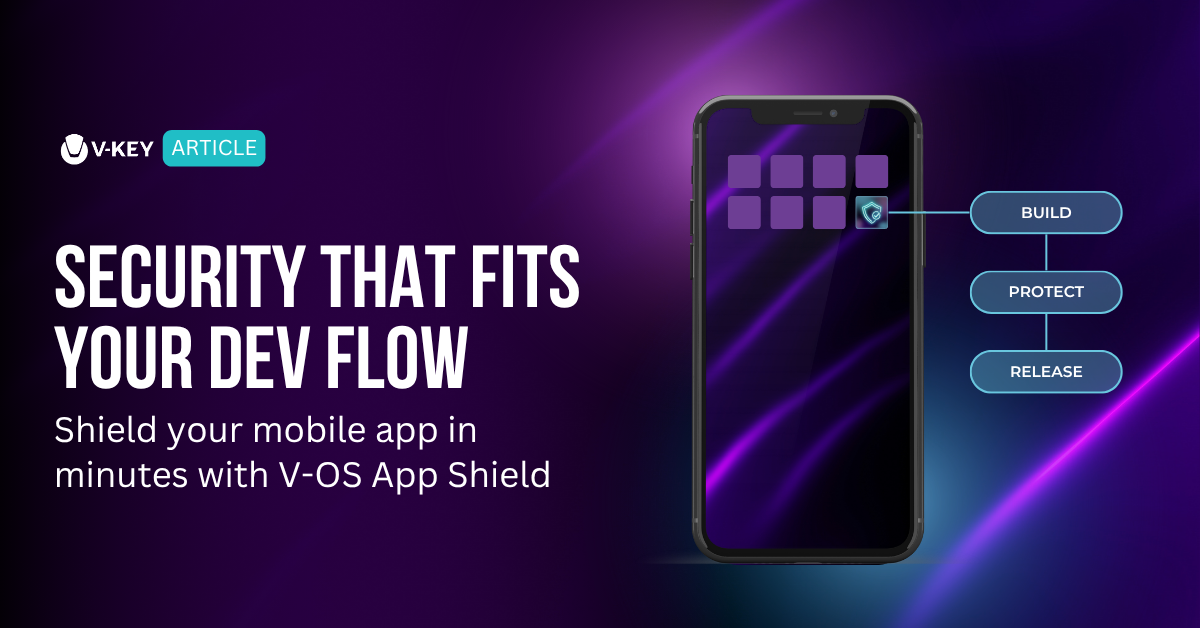
Shield in Minutes and Keep Your Mobile App Fast and Secure

Mobile apps have become the primary gateway for users to browse, purchase, book, track, earn rewards, and engage in real…

Modern Authentication in ANZ: Finding the Balance Between Security and User Experience

In Australia and New Zealand, authentication has reached a turning point.  Banking apps, telco platforms, superannuation portals, and digital health…

How to Choose the Right Authenticator

Authentication is essential for ensuring that only authorized individuals gain access while keeping unauthorized users out.

Navigating Business, Technology and Trust: V-Key at AIBP Malaysia 2025

The AIBP Conference & Exhibition 2025 in Kuala Lumpur brought together decision-makers from across the financial services, enterprise, and technology…
V-Key Expands to Japan, Enhancing Mobile App and Digital Identity Security

V-Key Expands to Japan, Enhancing Mobile App and Digital Identity Security

2025 June — V-Key is expanding into Japan, bringing trusted digital identity and mobile app protection to one of the…
Built for RMiT, Securing Malaysia’s Financial Future with V-Key

Built for RMiT, Securing Malaysia’s Financial Future with V-Key

More than just a requirement, compliance is what helps businesses stay strong and keep customer trust intact. This is especially…
How V-Key ID Enhances Banking Security

How V-Key ID Enhances Banking Security

In Australia’s highly regulated financial environment, robust digital identity and authentication controls aren’t just best practice, they’re a compliance imperative.…
Why Developers Shouldn’t Have to Choose Between Speed and Security

Why Developers Shouldn’t Have to Choose Between Speed and Security

Mobile development moves fast. There are always new features to launch, bugs to fix, and deadlines to meet—and developers are…
The Real Cost of Mobile App Breaches and How to Stay Ahead of Threats

The Real Cost of Mobile App Breaches and How to Stay Ahead of Threats

Mobile apps have become the primary engagement channel for modern businesses. Whether it’s a healthcare portal, an e-commerce platform, a…
The Fake SMS That Looks Real

The Fake SMS That Looks Real

Why Indonesia needs to talk about digital trust—now.  It usually begins with a simple SMS. You’re going about your day,…
Building Digital Trust with V-Key at the State Bank of Vietnam Event 

Building Digital Trust with V-Key at the State Bank of Vietnam Event 

2025 April, Vietnam –  V-Key had the privilege of participating in the State Bank of Vietnam (SBV) CIO Roundtable event…
Journey to  Passwordless Authentication

Journey to Passwordless Authentication

Is it the Beginning of the End of Passwords?  In the wake of cyber-attacks at some of the biggest Superannuation…
Vietnam’s New Digital Security Regulations: Strengthening Mobile and Biometric Protections

Vietnam’s New Digital Security Regulations: Strengthening Mobile and Biometric Protections

Vietnam is rapidly enhancing its digital security landscape. In just the past six months, two major regulations—Decision 2345 (effective July…
Mobile Malware Landscape in 2024: Why App Security Is Critical for Businesses

Mobile Malware Landscape in 2024: Why App Security Is Critical for Businesses

Mobile malware attacks are rising as mobile banking, digital payments, and remote authentication become mainstream. In 2024, over 33.3 million…
Strengthening Australia’s Digital Identity Future 

Strengthening Australia’s Digital Identity Future 

Australia is making significant progress in digital identity adoption, with the federal government leading efforts through its national Digital ID…
Beyond OTPs: The Shift to Passwordless Authentication in Banking

Beyond OTPs: The Shift to Passwordless Authentication in Banking

The Bangko Sentral ng Pilipinas (BSP) is considering phasing out one-time passwords (OTPs) for digital banking transactions, citing the growing…
V-Key Continues to Expand in Australia to Strengthen Digital Identity and Authentication

V-Key Continues to Expand in Australia to Strengthen Digital Identity and Authentication

V-Key strengthens its presence in Australia by participating in the FIDO Alliance events in Melbourne, reinforcing its commitment to digital…
Why Passwordless Authentication is the Future of Security

Why Passwordless Authentication is the Future of Security

Managing passwords can be challenging. They can be difficult to remember, and often, people reuse them across multiple sites, which…
Protect Your Business All Year with V-Key ID and FIDO2

Protect Your Business All Year with V-Key ID and FIDO2

Lunar New Year is a time for celebration for many people around the world, but it’s also a good opportunity…
V-Key’s 2024 Journey in Advancing Digital Security and Empowering Seamless Digital Experiences

V-Key’s 2024 Journey in Advancing Digital Security and Empowering Seamless Digital Experiences

As we reflect on 2024, V-Key is proud of the milestones we’ve achieved and the innovations we’ve introduced in the…
5 Simple and Effective Ways to Secure Your Mobile App with V-OS App Shield

5 Simple and Effective Ways to Secure Your Mobile App with V-OS App Shield

For businesses, especially those handling sensitive data or financial transactions, ensuring app security is no longer optional. The risk is…
Securing Mobile Apps and Why It’s Critical for Businesses

Securing Mobile Apps and Why It’s Critical for Businesses

Mobile devices continue to become indispensable, with the average smartphone user spending around 88% of their day interacting with apps.…
Introducing V-OS App Shield: Connect, Deploy and Protect your App in Minutes

Introducing V-OS App Shield: Connect, Deploy and Protect your App in Minutes

Mobile applications are key to daily business operations, customer engagement, and overall functionality. According to Google, the average smartphone user…
V-Key partners with Bridge Alliance to build a Safer Digital Ecosystem

V-Key partners with Bridge Alliance to build a Safer Digital Ecosystem

V-Key, renowned for its advanced security solutions has proudly joined Bridge Alliance as their technology Partner,  solidifying their commitment to…
Making 2FA/MFA robust against smishing and related attacks

Making 2FA/MFA robust against smishing and related attacks

2FA/MFA was introduced to make it harder for attackers, by requiring two or more proofs of identity – also known…
How do we determine the effectiveness of mobile apps’ security systems?

How do we determine the effectiveness of mobile apps’ security systems?

With the spate of remote working regime due to Coronavirus pandemic, the reliance and growth for video conferencing platform has…
Is the detection of jailbroken/rooted phone sufficient against threats?

Is the detection of jailbroken/rooted phone sufficient against threats?

Functions that detect jailbroken/rooted devices are most commonly added to transactional mobile applications, serving as the most basic defense against…
Three steps to fight the Mobile Security status quo

Three steps to fight the Mobile Security status quo

Have financial institutions accepted a status quo that sacrifices user experience for increased security? With mobile digital identity quickly becoming…
V-OS Protection against Android Plugin malware

V-OS Protection against Android Plugin malware

There has been a recent surge in Android malware abusing Android Plugin Frameworks for malicious behavior. DroidPlugin, Parallel Space and…

V-OS Protection against CPU vulnerabilities

Virtually every computing device in the world is made unsafe by the latest disclosures on Central Processing Unit (CPU) vulnerabilities.…
The next wave of Finance: Singapore’s growing Fintech market

The next wave of Finance: Singapore’s growing Fintech market

With global cumulative investment in financial technology (fintech) forecast to exceed US$150 billion in three to five years, economies around…
Infographic: The next frontier in Banking transformation

Infographic: The next frontier in Banking transformation

As technology evolves, banks and financial institutions have no choice but to innovate. However, when it comes to security, many…
How does a Virtual Smart card protect a customer if they lose or change their mobile phone?

How does a Virtual Smart card protect a customer if they lose or change their mobile phone?

From banks to government agencies, many organisations are intrigued by and exploring software security solutions such as mobile tokens and…
Building V-OS with HSM

Building V-OS with HSM

V-OS is the world’s first virtual secure element, a software solution with security built into the firmware code. These include…
Cryptography in V-OS

Cryptography in V-OS

V-OS is the world’s first virtual secure element. Cryptography plays a dual-role in these; to secure and manage the secrets…

Why Existing Mobile Software Protections are Insufficient

Recognizing that existing mobile software protections are insufficient against today’s cyber threat landscape, we take a closer look at the main…
Mobile Security that works for everyone

Mobile Security that works for everyone

Safe, convenient and simple.